History of Rock
Introduction and Listening to Rock
First Orders of Biz!
- No laptops or smartphones allowed in class!
- If you have an accommodation or a case for exception, please come see me.
- This is a music appreciation course! We will listen, converse, think, take a chill pill, and engage. We don't need computers for this.
- All slides and materials for the course can be found here:
- https://www.danielmckemie.com/courses/musc-3323
Introductions
- Daniel McKemie
- Lecturer in Music at SUNY Oneonta
- Composer, audio and software engineer, and percussionist
- PhD Student in Information Science (Data Analytics) at UAlbany
- MS in Computer Science (Health Informatics); Brooklyn College
- MA in Music Composition; Mills College
- BA in Music Performance; University of Nevada, Las Vegas
- 2nd year at SUNY!
Syllabus
- Available in Brightspace and the link below.
- https://www.danielmckemie.com/courses/musc-3323/MUSC-3323-01-McKemie_Fall2026.pdf
Course Description
- A survey and analysis of style and content from the pre-50's to the present day. The course will trace the musical and sociological development of this contemporary music idiom from its predecessors to the present day. Artists to be studied include Bill Haley, Elvis Presley, Chuck Berry, the Beatles, the Rolling Stones, Stevie Wonder, Elton John, and others. Emphasis will also be placed on the various sub-styles of rock music which developed including rockabilly, soul music, acid rock, southern rock, country-western, hard rock, and new wave music.
Course Objectives
- Upon completion of this course the student will have a fundamental grasp of the history and evolution of 20th century popular music, including key artists and their influences as well as the musical forms, structures, and clichés that define the genre.
Textbooks
- What's That Sound
- An Introduction to Rock and Its History (6th ed.)
- by John Covach & Andrew Flory
- ISBN: 978-0-393-87665-9
- 5th edition also supported
- Link to purchase textbook
Grade Breakdown
- Quizzes (10% each) – 30%
- Essays (10% each) – 30%
- Midterm Exam – 10%
- Final Exam – 10%
- Participation/Discussion – 20%
- There will be no curving or scaling of grades.
Grade Component Details
- Quizzes: 30% total (10% each)
- Short assessments to gauge concepts and topics up to that point in class
- True/False, Multiple Choice, Multi-Select, Short Answer
- Taken during class time
Grade Component Details
- Essays: 30% total (10% each)
- Short essay around topics, music, and material covered in class.
- Graded on effectiveness in speaking to the topics NOT writing style or grammar
- Two in-person on quiz days, one take home due on the date of the Midterm.
Grade Component Details
- Midterm Exam: 10% total
- In-class exam covering material from the 1st half of semester.
- True/False, Multiple Choice, Multi-Select, Short Answer
- Monday, Oct. 18
Grade Component Details
- Midterm Exam: 10% total
- In-class exam covering material from the 2nd half of the semester.
- True/False, Multiple Choice, Multi-Select, Short Answer
- Monday, Dec 14, 2026 @ 11am
- There are no make-ups or reasons to miss the final exam date!!!
Grade Component Details
- Participation/Discussion: 20%
- The participation grade is a combination of attendance (including arriving on time); attentiveness, engagement, and participation during class; and general preparedness for class discussions.
- If you are asked more than once to put away your laptop/headphones/tablet/phone, you will be asked to leave class and will be marked as non-participatory for the day.
Course Schedule
| Week | Topic | Class Dates | Grade Component |
|---|---|---|---|
| Week 1 | Intro: Studying Rock | 8/24, 8/26, 8/28 | |
| Week 2 | The World Before Rock and Roll | 8/31, 9/2, 9/4 | |
| Week 3 | Delta and Chicago Blues; R&B; Urban Black Music | 9/7 (Labor Day; No Class!), 9/9, 9/11 | |
| Week 4 | The Birth of Rock | 9/14, 9/16, 9/18 | Quiz 1/Essay 1 |
| Week 5 | The British Invasion | 9/21 (Grow, Thrive, Live; No Class!), 9/23, 9/25 | |
| Week 6 | American Responses/Motown | 9/28, 9/30, 10/2 | |
| Week 7 | Psychedelia and Counterculture | 10/5, 10/7, 10/9 | |
| Week 8 | Progressive Rock and Heavy Metal | 10/12, 10/14, 10/16 | Midterm/Essay 2 Due |
| Week 9 | Reggae, Dancehall, and Ska | 10/19, 10/21, 10/23 | |
| Week 10 | The Birth of Punk Rock | 10/26, 10/28, 10/30 | Quiz 2 |
| Week 11 | Glam Rock to Big Hair and New Wave | 11/2, 11/4, 11/6 | |
| Week 12 | Third Wave Punk and Riot Grrrl | 11/9, 11/11, 11/13 | Quiz 3/Essay 3 |
| Week 13 | The Grunge Era into Industrial | 11/16, 11/18, 11/20 | Quiz 3/Essay 3 |
| THANKSGIVING BREAK | NO CLASS! | 11/23, 11/25, 11/27 | |
| Week 14 | NYC and Indie Rock | 11/30, 12/2, 12/4 | |
| Week 15 | Modern Styles/Final Exam Review | 12/7, 12/9 (classes follow MONDAY schedule), 12/11 (STUDY DAY) |
Brightspace
- Brightspace will be used to track grades and participation. It will also house the syllabus.
- Brightspace will be used for announcements to the whole class.
- Brightspace will be used for nothing else.
- All slides and materials for the course can be found here:
- https://www.danielmckemie.com/courses/musc-3323
Policy on AI
- While GenAI (ChatGPT, Claude, etc.) are useful tools in study, productivity, and education, they are not necessary for any work in this course.
- Suspicion that AI was solely or partly used for any assignment will result in the student being called to explain and/or defend their assignment. If it is deemed that AI was used, a zero will be given for the assignment.
Policy on AI
- Multiple infractions of this policy will result in a failing grade (E) for the course according to the academic dishonesty policy.
- Academic Dishonesty Policy and Procedure
Email Policy
- Do not email me if you are going to miss class unless something is actionable!
- If I don't respond to your email, do not send a follow-up email!
- I am pretty good about email, but I sometimes only respond during office hours unless it's deemed urgent!
- Do not write me through Brightspace!
Studying Rock
- Reading: Introduction and Chapter 1
- Elements to Consider
- What to Listen for in Rock
- Typical Forms in American Pop Music
- Instrumentation
- Studio Recording
- Viewing Rock
Elements
- General Interest accounts
- Radio, TV, Magazines
- Fan mentality
- Open-mindedness on the unfamiliar
- Chart positions
- Billboard/RIAA (Gold/Platinum Records)
- Four themes
- Social, political, cultural, business
What to Listen For in Rock
- Form and Terminology – Structure of a song
- Verse – unique lyrics, narrative
- Chorus – repeated section, hook
- Bridge – departure, interlude
- Solo – instrumental
- Pre-chorus – different melody/chords than verse, leading to chorus
What to Listen For in Rock
- Beats – where the count falls ("1, 2, 3, 4")
- Measure/Bar – group of four beats (90% of rock is in 4)
- Tempo – speed of a song (e.g. 120 bpm)
- Phrase – musical statement, often 4 bars or a repeated/fixed length
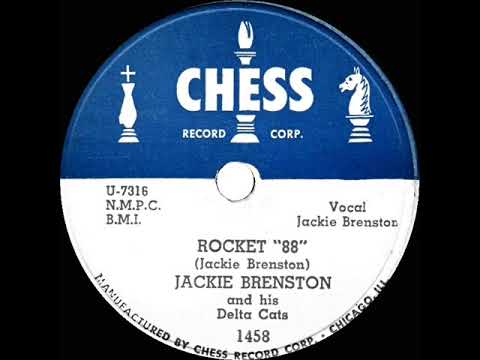
Jackie Brenston and His Delta Cats – Rocket '88
Listening Guide
Jackie Brenston and His Delta Cats, "Rocket '88'" Chess 1458
Words and music by Jackie Brenston, produced by Sam Phillips. "Rocket '88'" hit #1 on the Billboard "Best Selling Retail Rhythm and Blues" and "Most Played Juke Box Rhythm and Blues" charts in 1951.
FORM: Simple verse.
TIME SIGNATURE: 4/4.
INSTRUMENTATION: Piano, drums, saxophones, solo vocals, distorted electric guitar playing a repeated boogie-woogie pattern.
| Timings | Section | Description |
|---|---|---|
| 0:00–0:19 | Instrumental verse | 12 mm., piano featured. |
| 0:19–0:38 | Verse 1 | 12 mm., "You women have heard of jalopies . . ." |
| 0:38–0:57 | Instrumental verse | 12 mm., saxophones featured. |
| 0:57–1:10 | Verse 2 (partial) | 8 mm., "V-8 motor . . ."; breaks off early. |
| 1:10–1:28 | Instrumental verse | 12 mm., sax solo. |
| 1:28–1:47 | Instrumental verse | 12 mm., sax solo continues. |
| 1:47–2:05 | Instrumental verse | 12 mm., sax solo continues. |
| 2:05–2:23 | Verse 3 | 12 mm., "Step in my rocket . . ." |
| 2:23–2:46 | Instrumental verse | 12 mm., sax and guitar featured. |
Jackie Brenston and His Delta Cats – Rocket '88
What to Listen For in Rock
- Key – the scale of the song (e.g. C-major, F-minor)
- Roman numerals – chords in relation to key, referred to in chord progressions
- Time signature – grouping of beats
- 4/4 – four beats to a measure
- 12/8 – four beats in a triplet feel
- 3/4 – three beats to a measure (waltz, etc.)
Instrumentation
- Rhythm section instruments
- Drums
- Bass
- Guitar
- Keyboard – piano, synthesizer, organ
- Singer/vocals
- Lead (melody)
- Backup (harmony)
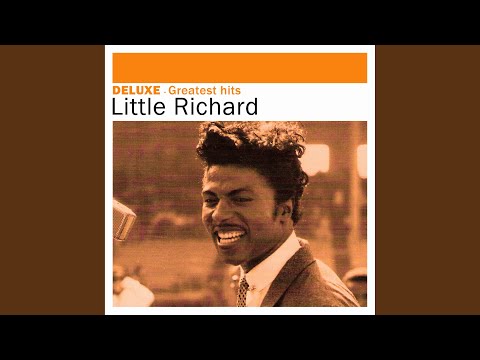
Little Richard – Tutti Frutti
Studio Recording
- Live – all players together
- Multitracked – instruments layered one at a time (overdubbed)
- Reverb – sound of a space/room (echo)
- Equalizer – changing the lows/mids/highs of a sound (EQ)
- Timbre – sound quality
- Mono – one speaker/channel
- Stereo – two speakers/channels
Viewing Rock
- Variety Shows
- Ed Sullivan, Hullaballoo, American Bandstand
- Soul Train
- MTV
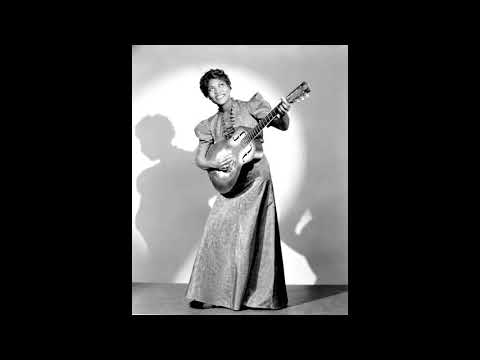
Sister Rosetta Tharpe – Strange Things Happening Every Day
The World Before Rock and Roll
The World Before Rock and Roll
- Emerged in 1955
- Music business was primarily publishers of sheet music; no prominent recording industry
- Big bands, country/western, R&B
Local/Regional Music – Pre-1920s
- Available "salon" style
- Oral traditions
- Regional genres: country, ragtime, R&B, indigenous/local traditions, jazz/big band, folk
Local/Regional Music – 1920s
- Radio – 1920s
- Growth of radio and "clear channels" and affiliates to reach coast-to-coast
- Began blurring regional vs. national
- Blurring of musical styles = new emergent musical styles
- NO records on-air, primarily live bands
- Live bands = local flavor
Media Growth – 1940s
- Radio – maintained a strong presence
- TV
- Not prominent yet but money and attention began focusing
- Would be instrumental in the introduction and rise of rock and roll
Ragtime – 1890s
- Originated among African American traditions and social scenes in central Missouri
- Strong use of syncopated rhythm
- First genre of American music to gain widespread popularity
- Recorded initially as sheet music and piano rolls
- "Big Three" – Scott Joplin, James Scott, and Joseph Lamb
Ragtime – 1890s
John Stark – 1890s
- Publishing of Maple Leaf Rag
- Sedalia/St. Louis, MO and NYC in 1899
- One penny per copy sold to Joplin (royalty)
- Main business model for music business
- Scott Joplin, Joseph Lamb, and James Scott
- Established a more modern business model, created alongside Tin Pan Alley
Tin Pan Alley – 1890s–1930s
- Core of music publishers on 28th St between Broadway and 6th Ave in NYC
- Created a center for new American music
- Irving Berlin, George Gershwin, Rodgers and Hammerstein, Fats Waller, and more
- Helped to disseminate a new style of American music and song
- Influenced musical theater and Hollywood
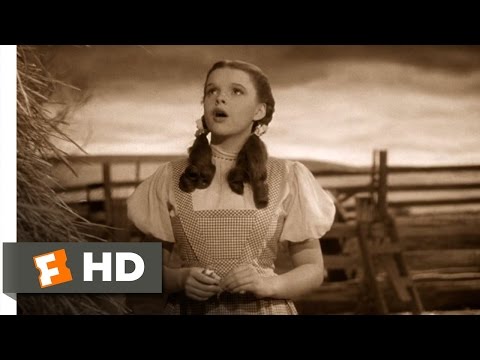
Over the Rainbow - Wizard of Oz (1939)