History of Rock
The British Invasion
Orders of Biz
- Write a critical essay comparing rock music before 1960 with rock music after 2015.
- Choose a specific topic related to the musical, technological, cultural, or social development of rock music. Develop an argument as to why this matter is important in the historical canon. This can range from examining artists, bands, lyrics, record labels, industry, the political climates, laws, business, or any other cultural point such as that we have discussed in class. If you are unsure if your topic fits, please ask!
Orders of Biz
- Due October 12
- In your same bluebooks, hand-written: 5 paragraphs (at least)
- Introduction: Establish the thesis.
- Historical Background: Explain the musical, social, political, or industry-related conditions of the time in regards to your project.
Orders of Biz
- Musical Analysis: Analysis is used loosely! I don't expect a theory paper, though it is welcomed. What I want is pointing to specific instruments, lyrics, performances, production techniques, and/or meanings.
- Critical Argument: Why is this important and why should we pay attention? This is the heart of your paper.
- I will be grading this thoroughly. Take your time on this and have fun with it!
Orders of Biz
- If it is suspected you used AI without an explicit disclosure as to how/why, you will be called to defend your paper either during class or in office hours. Failure to adequately defend will result in a zero for the assignment and possible reporting to the Office of Community Standards according to the university's academic dishonesty policy.
- SUNY Oneonta Code of Student Conduct, Appendix A
The British Invasion
- Read Chapter 4
Before the Invasion – 1960–1963
- 1950s and early 1960s saw American popular music dominant in both US and UK
- A lot of same chart toppers and embracing the idea of rock and roll and rebellion
- BBC monopolized radio waves until 1972
- Major port cities in the UK saw influx of US records and burgeoning music scenes
- Liverpool, Bristol, London, Manchester
Before the Invasion – 1960–1963
- Skiffle
- Genre of folk music similar to country, bluegrass, blues, and characterized by handmade or inexpensive instruments
- Growing interest in post-war Britain
- Tough rebuilding and economic growth
- Lonnie Donegan – Rock Island Line (1956)
- Brings guitar-led music to the masses
Lonnie Donegan - Rock Island Line (1956)

Before the Invasion – 1960–1963
- Merseybeat
- Genre influenced by blues, R&B, skiffle, and early rock emerging in Liverpool in the early 1960s
- Guitar driven with a shuffle and new images/looks of the UK teenage rebellion (long hair lol)
- Liverpool a hot bed of new music, influx of records, and increased attention in Europe
- The Beatles, Gerry and the Pacemakers
- Further bringing guitar-led music to the masses
Gerry and the Pacemakers - How Do You Do It (1963)

Before the Invasion – 1960–1963
- The Beatles
- Formed in 1960 out of a skiffle group called The Quarrymen a few years earlier.
- Solidified lineup of John Lennon, Paul McCartney, George Harrison, and Ringo Starr in 1962
- Unequivocally the most influential band in the history of western pop music
- First appeared on Ed Sullivan on Feb. 9, 1964, immediately launches British Invasion and Beatlemania
- Record breaking debut with a second appearance a week later
The Beatles - I Want To Hold Your Hand (2/9/64)
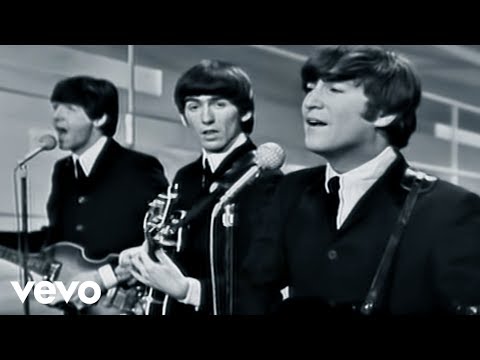
The Beatles - I Want To Hold Your Hand (2/9/64)
Listening Guide
The Beatles, "I Want to Hold Your Hand" Parlophone R-5084 (UK), Capitol 5112 (U.S.)
Words and music by John Lennon and Paul McCartney, produced by George Martin. Reached #1 on UK charts in late 1963 and #1 on the Billboard "Hot 100" in early 1964.
FORM: AABA, with partial reprise. The bridge and verse sections are repeated after the complete verse-verse-bridge-verse structure has been presented. Each verse ends in a 4-bar refrain, employing the song's title in the lyrics and featuring two-part vocal harmony; the previous bars in the verse are sung in two-part unison. Note that the first bridge is sung in unison (except at the very end), while the repeated bridge is sung in two-part harmony. The introduction is built from the last 4 bars of the bridge, while the song's ending is created by tagging the last bars of the refrain.
TIME SIGNATURE: 4/4. This lighthearted, driving pop feel with accents on beats 2 and 4 was called "Mersey beat" in the UK.
INSTRUMENTATION: Electric guitars, bass, drums, hand claps, and two-part lead vocal (with sections in unison and in harmony).
| Timings | Section | Description |
|---|---|---|
| 0:00–0:08 | Introduction, 4 mm. | Instrumental with lots of driving rhythm guitar, derived from bridge. |
| 0:08–0:29 | A-Verse with refrain, 12 mm. | Mostly unison vocals, hand claps enter, "Oh yeah I'll tell you . . ." |
| 0:29–0:51 | A-Verse with refrain, 12 mm. | As before, "Oh please, say to me . . ." |
| 0:51–1:11 | B-Bridge, 11 mm. | Unison until end, quieter to provide contrast, but building at end, "And when I touch you . . ." |
| 1:11–1:33 | A-Verse with refrain, 12 mm. | As before, hand claps return, "Oh you got that somethin' . . ." |
| 1:33–1:54 | B-Bridge, 11 mm. | New two-part harmony vocals, quiet until the end as before, "And when I touch . . ." |
| 1:54–2:22 | A-Verse with tag, 15 mm. | As before, 3 bars added at ending, "Yeah you got that . . ." |
The Invasion! – 1964–1966
- The Beatles
- Stopped performing live in 1966
- Audience volume made it impossible to hear their own music and wanted to explore other avenues of music making
- Novel recording techniques
- Solidifying rock and roll sound
The Invasion! – 1964–1966
- The Beatles
- Heavy counterculture influence
- Psychedelic rock
- Split in 1970
- Shepherds of culture throughout the 1960s
The Invasion! – 1964–1966
- The Rolling Stones
- Formed in 1962, landed in America in June 1964
- Heavy influence of blues and rock
- Hard sound, more suggestive lyrics, "bad boy" attitudes and looks
- Mick Jagger, Keith Richards, Charlie Watts (1963–2021, d. 2021), Brian Jones (1962–1969, d. 1969), Ronnie Wood (1975–Present)
- Longevity, still making records and touring!
The Rolling Stones - It's All Over Now (1964)

After the Invasion – 1970 onward
- The Beatles
- Yoko Ono DID NOT BREAK UP THE BEATLES
- Yoko Ono introduced John Lennon and the band to radically new ideas of the time
- More on The Beatles later this term!
- The Beatles vs. Rolling Stones
- Don't subscribe to this nonsense. Industry driven move designed to sell records. (It worked!)
- Two different bands with two entirely different legacies
The Invasion! – 1960s
- "Beatles as Pop and Stones as Blues"
- The Kinks
- Formed in 1963
- "Aggressive pop approach"
- Mindful lyrics, driving rhythms, but catchy arrangements and pop sensibility
- The Who
- High fashion and theatrics
- Solos, flashy playing, conceptual lyrics
- Part of the British Mod movement
The Kinks – You Really Got Me (1964)
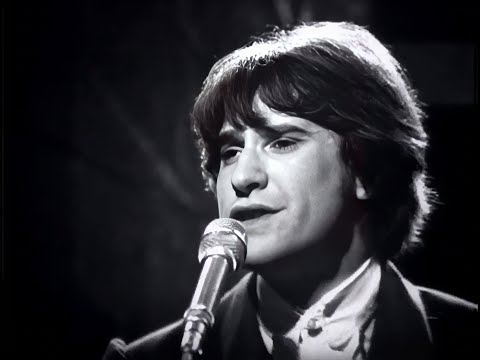
The Kinks – You Really Got Me (1964)
Listening Guide
The Kinks, "You Really Got Me" Pye 7N 15673 (UK), Reprise 0306 (U.S.)
Words and music by Ray Davies, produced by Shel Talmy. Reached #1 on the UK Record Retailer and #7 on the Billboard "Hot 100" in the United States in 1964.
FORM: Simple verse form, with repeated 20-bar verses built on a two-chord pattern that is repeated progressively higher on the guitar providing a sense of growing tonal intensification as the verse proceeds. This two-chord pattern is not transposed during the guitar solo, and a comparison of that partial verse with the other complete ones highlights this tonal difference.
TIME SIGNATURE: 4/4. Note the use of repeated piano chords and tambourine to underscore the beat and its division in two parts (simple time).
INSTRUMENTATION: Electric guitars, piano, bass, drums, tambourine, lead and backup vocals. While this track is professionally produced, the backup vocals give it a wild and almost amateurish quality, an impression reinforced by the manic but relatively primitive guitar solo.
| Timings | Section | Description |
|---|---|---|
| 0:00–0:07 | Introduction, 4 mm. | Starts with 1-bar guitar figure played twice, then band enters. Note the distorted tone in the guitar. |
| 0:07–0:42 | Verse 1 with refrain, 20 mm. | Vocals enter. Note how the verse builds, first with solo vocal, then with added piano, then with added backup vocals, also getting increasingly louder to drive to the refrain, "Girl, you really got me . . ." |
| 0:42–1:17 | Verse 2 with refrain, 20 mm. | As before, "See, don't ever set . . ." |
| 1:17–1:34 | Instrumental verse (partial), 10 mm. | Guitar solo as the music breaks into a controlled frenzy. |
| 1:34–2:12 | Verse 2 with refrain, 20 mm. | Repeats lyrics of second verse, last 2 bars changed to create ending. |
The Who – My Generation (1965)

The Who – My Generation (1965)
Listening Guide
The Who, "My Generation" Brunswick 05944
Words and music by Pete Townshend, produced by Shel Talmy. Rose to #2 in the UK "Record Retailer Singles" chart in late 1965.
FORM: Simple verse, each verse includes a refrain. The verses are quite similar and are built up from 4-bar phrases. Later verses expand in 4-bar increments to 24 and 28 measures, with the coda running to 36 measures plus the final bar (37 mm.). A distinctive feature of this song is the use of key changes, always moving upward (in this case, G, A, B♭, and C). This has the effect of driving the song toward its explosive climax at the end.
TIME SIGNATURE: 4/4, moderately fast tempo.
INSTRUMENTATION: Lead and backup vocals, two electric guitars, bass, drums. During the aggressive coda the band would often destroy the guitar and drums. Something of that manic energy is projected through the use of driving drums and guitar feedback at the end in this studio recording.
| Timings | Section | Description |
|---|---|---|
| 0:00–0:05 | Introduction, 4 mm. | Guitar, bass, and drums establish driving main riff. |
| 0:05–0:30 | Verse (with refrain), 20 mm. | Vocal enters, stuttering and alternating with backup vocals, "People try . . ." |
| 0:30–0:55 | Verse, 20 mm. | As before, notice the provocative stutter on the word "fade," "Why don't you all . . ." |
| 0:55–1:20 | Verse (instrumental), 20 mm. | Bass solo featuring John Entwistle. |
| 1:20–1:54 | Verse, 28 mm. | Key change for new verse, with another new key established in last four bars, "Why don't you all . . ." |
| 1:54–2:24 | Verse, 24 mm. | As before, but in new key established at end of previous verse, "People try . . ." |
| 2:24–3:16 | Coda, 37 mm. | Yet another key change as drums become much more active and guitar gets wilder, based on refrain. |
The Sixties - British Invasion Doc

The Invasion! – 1960s
- Bands and artists writing and performing their own music
- Prior standard was around artists getting paired with literature
- Chuck Berry begins to break this down
- Increased focus on lyrics
- Blends of folk and rock
- Poetry and politics with electric sound
- Bob Dylan goes electric at Newport Folk Festival – July 1965
Bob Dylan – Live at Newport Folk Festival (1965)

Other Characteristics of The Invasion
- Stylistic blends beyond western music
- Increased emphasis on the full record
- The Beatles' Rubber Soul
- Songs curated and programmed to fit together
- The recording studio as an instrument
- Concept albums
- The whole record tells a story
- Sgt. Pepper's Lonely Hearts Club Band
Other Characteristics of The Invasion
- The recording studio as an instrument
- New technology informing arrangements, sound palettes and how music is presented
- Influenced by engineers working alongside bands and the avant-garde
- John Cage, Karlheinz Stockhausen and Fluxus (Yoko Ono!)
- Sgt. Pepper's heavily reliant on tape splicing techniques and new instruments
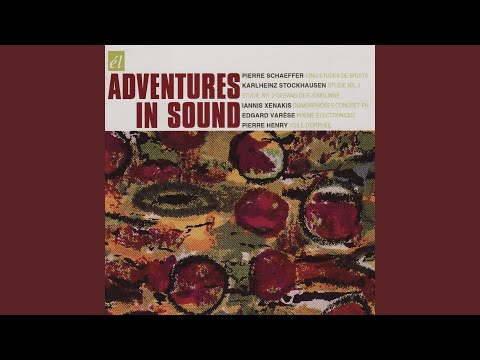
Karlheinz Stockhausen on the cover of Sgt. Pepper's...
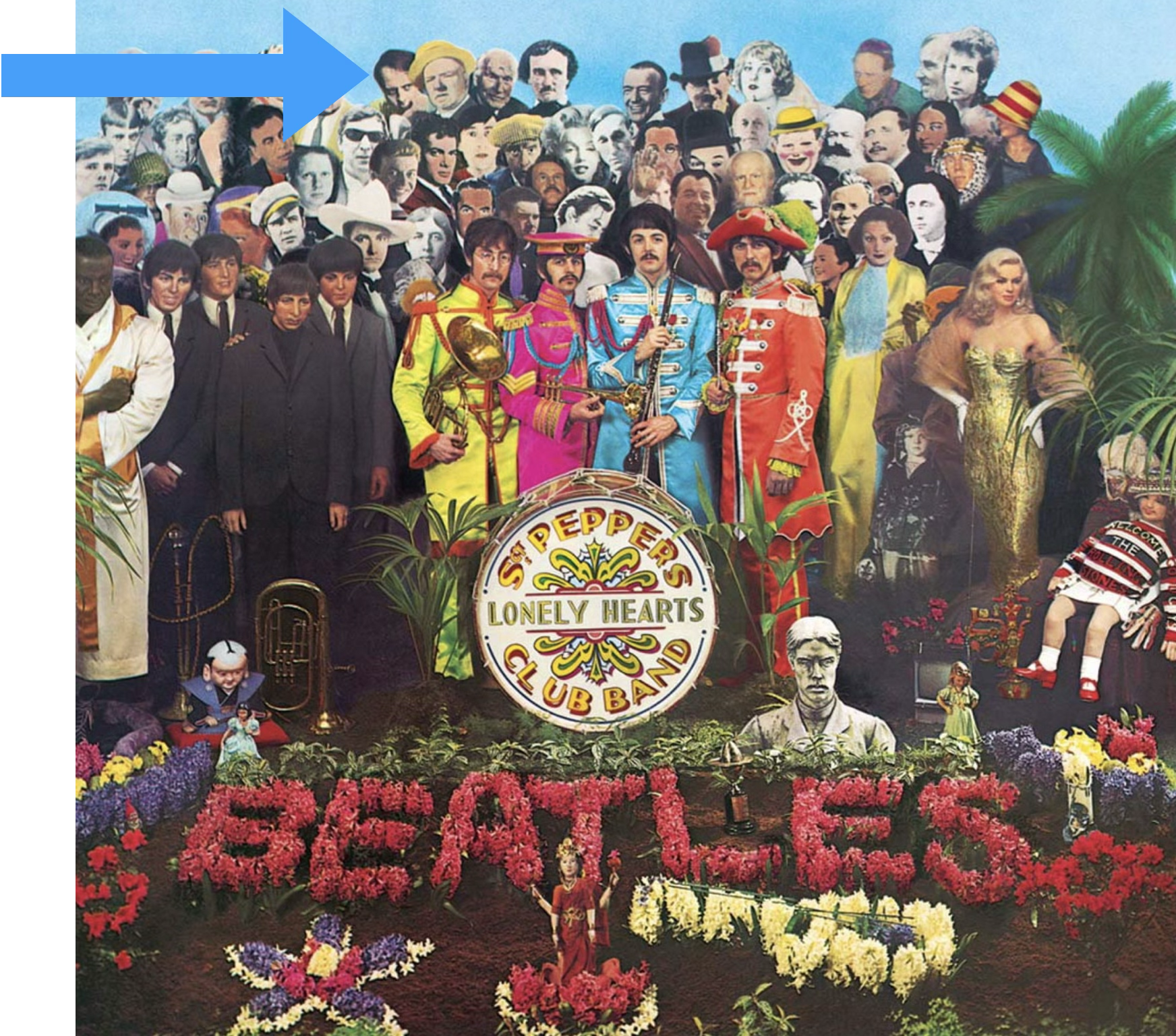
Karlheinz Stockhausen - Gesang der Jünglinge
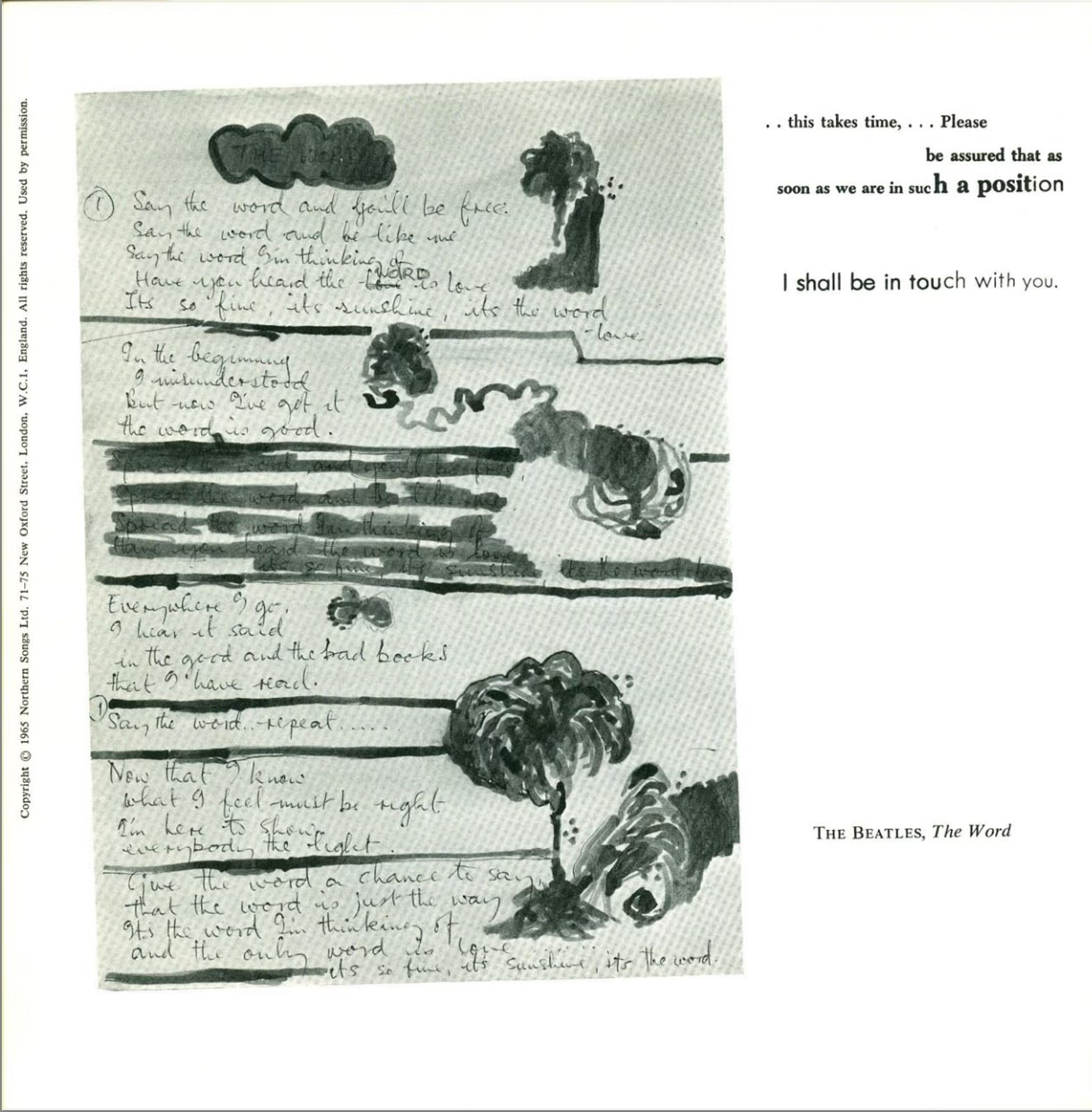
Manuscript of The Word from Rubber Soul – In John Cage's book Notations (1969)
Post Invasion – After 1966
- More American artists and groups adopting the new sound
- Move to psychedelic rock
- Increased counterculture presence, Summer of Love, jam bands, into disco
The Beatles – Sgt. Pepper's Lonely Hearts Club Band

Music Through the Years
- Traditional folk song – "In The Pines"
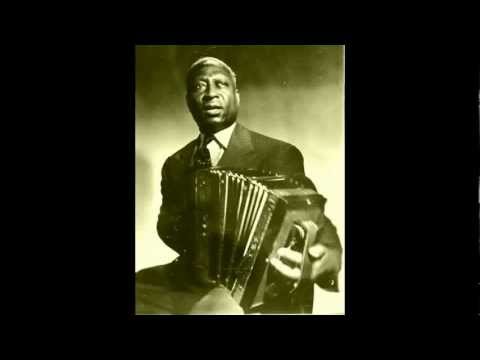
- Leadbelly
- British Invasion – Four Pennies
- Grunge – Nirvana
- Modern Day – Sleigh Bells
In the Pines – Traditional / "Dock" Walsh (1926)
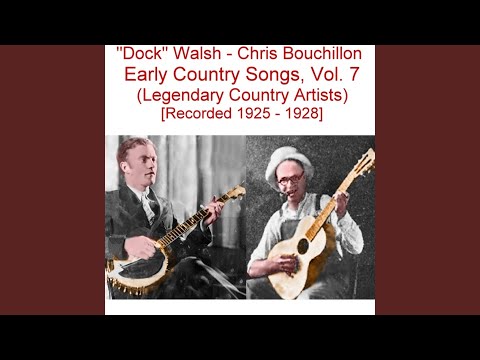
In the Pines / Black Girl – Leadbelly (1944)
Black Girl – Four Pennies (1964)
Where Did You Sleep Last Night – Nirvana (1993)

Where Did You Sleep Last Night – Sleigh Bells (2019)
Reading
- Read Chapter 5 – American Responses