History of Rock
American Responses
American Responses – 1965–1969
- Bob Dylan's Newport Folk Festival performance met with disappointment and outward rejection
- General public not familiar or interested in folk music
- Came from a long tradition of songwriters
- Writing and performing their own music
- Playing each other's songs, and adapting older styles to their own
- Bob Dylan has an enormously successful tour of the UK in 1965
American Responses – 1965–1969
- Returns to the US and "breaks" with the folk tradition by going electric
- Dylan was messing with electric instruments a few years prior
- Significant in that electric instruments were NEW!
- Bob Dylan showed that serious issues and politics could cross over into rock and be well-received
Bob Dylan – Subterranean Homesick Blues (1965)

Bob Dylan – Positively 4th Street (1965)

Bob Dylan – Positively 4th Street (1965)
Listening Guide
Bob Dylan, "Positively 4th Street" Columbia 43389
Words and music by Bob Dylan, produced by Bob Johnston. Rose to #7 on the Billboard "Hot 100" in the fall of 1965.
FORM: Simple verse. Like many Dylan songs, this song has a lot of lyrics. In this case, Dylan delivers 12 verses over the same 8-bar structure, without much change in the accompaniment. In contrast to the technique of building an arrangement by adding instruments or vocal parts as the song progresses, this track remains static, leaving the listener to focus on the lyrics.
TIME SIGNATURE: 4/4. Note the finger cymbals on beat 4 of each measure.
INSTRUMENTATION: Piano, organ, electric guitars, drums, finger cymbals, lead vocal. Pay particular attention to Al Kooper's organ playing, which came to be much imitated despite Kooper's insistence that he was not really an organist.
| Timings | Section | Description |
|---|---|---|
| 0:00–0:09 | Introduction, 4 mm. | Organ melody featured. |
| 0:09–0:26 | Verse 1, 8 mm. | Vocals enter, organ adds melodic interest, while the other instruments keep a low profile, supporting the vocal, "You got a lot of nerve . . ." |
| 0:26–0:44 | Verse 2, 8 mm. | As before, "You got a lot of nerve . . ." |
| 0:44–1:01 | Verse 3, 8 mm. | As before, "You say I let you down . . ." |
| 1:01–1:19 | Verse 4, 8 mm. | As before, "You say you lost your faith . . ." |
| 1:19–1:36 | Verse 5, 8 mm. | As before, "I know the reason . . ." |
| 1:36–1:53 | Verse 6, 8 mm. | As before, "Do you take me . . ." |
| 1:54–2:11 | Verse 7, 8 mm. | As before, "You seen me on the street . . ." |
| 2:11–2:28 | Verse 8, 8 mm. | As before, "When you know . . ." |
| 2:28–2:46 | Verse 9, 8 mm. | As before, "Now I don't feel . . ." |
| 2:46–3:03 | Verse 10, 8 mm. | As before, guitar and piano get a little busier, but not much, "And now I know . . ." |
| 3:03–3:21 | Verse 11, 8 mm. | As before, "I wish that for just one . . ." |
| 3:21–3:38 | Verse 12, 8 mm. | As before, "I wish that for just one . . ." |
| 3:38–3:51 | Instrumental verse (partial), 4 mm.+ | Organ featured again, as track fades out. |
American Responses – 1965–1969
- The Byrds furthering the electrification of folk music
- The first international "folk-rock" single was Mr. Tambourine Man by Bob Dylan
- Formed in Los Angeles and initialized "The California Sound"
- Heavily influenced by The Beatles
The Byrds – Mr. Tambourine Man (1965)
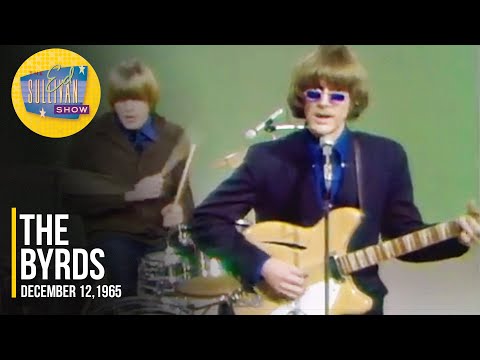
The Byrds – Mr. Tambourine Man (1965)
Listening Guide
The Byrds, "Mr. Tambourine Man" Columbia 43271
Words and music by Bob Dylan, produced by Terry Melcher. Rose to #1 on the Billboard "Hot 100" in the summer of 1965.
FORM: Contrasting verse-chorus, beginning with the chorus. Dylan's original alternates the chorus with multiple verses, but the Byrds use only one of the original verses. The resulting form looks a little strange, but the band had to fit the arrangement into the two-minute format of AM radio at the time.
TIME SIGNATURE: 4/4, with a feel borrowed from "Don't Worry Baby."
INSTRUMENTATION: Electric twelve-string guitar, electric six-string guitar, bass, drums, solo and duet vocals.
| Timings | Section | Description |
|---|---|---|
| 0:00–0:08 | Introduction, 4 mm. | Electric twelve-string begins with a lick inspired by J. S. Bach, then sliding bass enters, followed by the entire band. |
| 0:08–0:41 | Chorus, 17 mm. | Duet vocals, then 2-bar link to verse; note the jingle-jangle picking on the electric twelve-string guitar, "Hey Mr. Tambourine Man . . ." |
| 0:41–1:30 | Verse, 25 mm. | Solo vocal; note the short, sharp chords played high on a second electric guitar, "Take me for a trip . . ." |
| 1:30–2:00 | Chorus, 15 mm. | Duet vocals as before; "Hey Mr. Tambourine Man . . ." |
| 2:00–2:15 | Coda, 6 mm. and fade | Music is the same as in the introduction. |
American Responses – 1965–1969
- California Sound
- Elements of surf rock and lyrics centered on California lifestyle: beaches, sunshine, surfing...
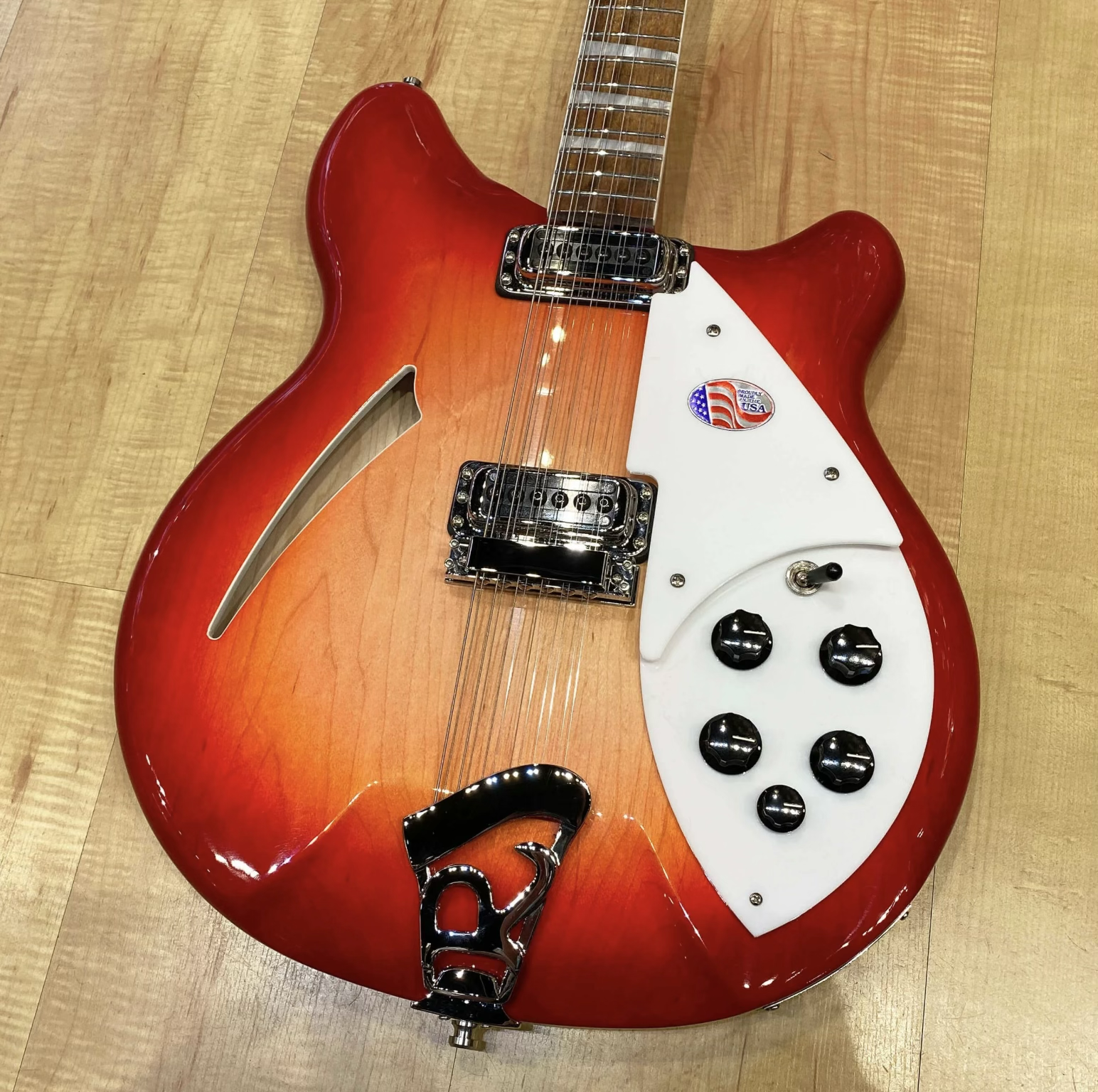
- Rickenbacker 12-string guitar sound
- Heavy presence of vocal harmony
American Responses – 1965–1969
- Notable acts of the California Sound
- Beach Boys
- The Byrds
- Mamas and the Papas
- The Turtles
- Sonny & Cher
- and more!
American Responses – 1965–1969 (Rickenbacker 12-string guitar)
American Responses – 1965–1969
- Phil Spector and the "Wall of Sound"
- Famed music producer, considered the first "auteur" in popular music
- Maintained or grabbed creative control of recording processes as producer
- Used arranging techniques to create huge presences of sounds on records
- Sometimes confused with high volume, distortion, and effects processing, but reliably done with instrumental layering
- He was also a HUGE scumbag!
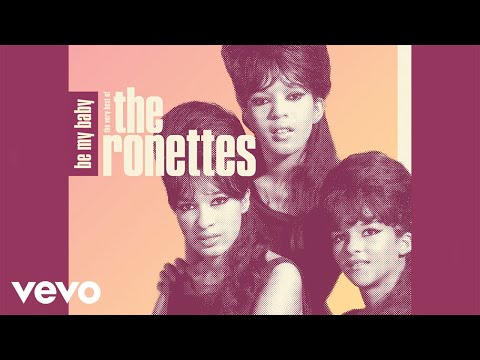
The Ronettes – Be My Baby (1963)
American Responses – 1965–1969
- Beach Boys' Pet Sounds – 1966
- 11th studio album by The Beach Boys and considered one of the greatest albums ever made
- Recorded over ~10 months; July 1965 – April 1966; a "response" to Beatles' Rubber Soul
- Heavily orchestrated, influenced by Wall of Sound but all produced by Brian Wilson
- Lyrics on personal flaws, alienation, escapist culture, use of LSD, and social anxiety
- Foundational work in psychedelic rock
The Beach Boys – Wouldn't It Be Nice (1966)

The Beach Boys – God Only Knows (1966)

Motown – 1959–1969
- Pre-Motown
- Black artists not being treated fairly
- Not being fairly compensated for songwriting
- White artists widely covering and inspired by black music
- The emergence of civil rights and visibility
Motown – 1959–1969
- Motown established in 1959 in Detroit, MI by Berry Gordy Jr.
- Took the model of Brill Building
- In NYC, post Tin Pan Alley, Brill established groups of songwriters and paired with budding, teen idol talent
- Also inspired by Ford Motor Co. assembly line
- Gordy already writing songs for other Detroit artists before establishing his label
Motown – 1959–1969
- Tightly housed
- Company owned studio in Detroit and offices all on the same block
- Consistent and high performing studio musicians on hand, like The Funk Brothers
- Early Van Dyke – piano
- Benny Benjamin – drums
- James Jamerson – bass
- Weekly meetings on quality control
Motown – 1959–1969
- Artist Development and Choreography
- Both on and off the stage
- Gordy and Co. believed that the artists needed to carry themselves with class
- Nurtured artists to maneuver the highest echelons of the music industry
Motown – 1959–1969
- The Supremes
- Initial lineup of Diana Ross, Mary Wilson, Florence Ballard, and Betty McGlown
- Quintessential Motown girl group
- Not successful at first until a particular variation of presentation gave a string of No. 1 hits (this is elaborated upon in detail in the book!)
The Supremes – Baby Love (1964)

The Supremes – Baby Love (1964)
Listening Guide
The Supremes, "Baby Love" Motown 1066
Words and music by Brian Holland, Lamont Dozier, and Edward Holland Jr., produced by Brian Holland and Lamont Dozier. Reached #1 on the Billboard "Hot 100" chart in the fall of 1964. (Note that the Billboard R&B charts did not run from December 1963 to late January 1965.)
FORM: Simple verse. A 12-bar verse structure is repeated relatively unchanged throughout. The only significant alterations are in verse 3, where the saxophones take over the melody after 4 bars, and in verse 5, which introduces a change of key via a 2-bar transition. The arrangement builds by adding instruments: the guitar enters in verse 2, as do call-and-response phrases between the lead and backup vocals, and saxophones are added in verse 3. The change of key gives the song a lift after verse 4. The song structure is nevertheless very simple, relying heavily on the vocal performance of Diana Ross.
TIME SIGNATURE: 4/4 (shuffle in four). Note how the sounds of feet stomping on boards pound out the beat throughout the song.
INSTRUMENTATION: Piano, vibes, electric guitar, bass, drums, saxes, foot stomping, lead and backing vocals.
| Timings | Section | Description |
|---|---|---|
| 0:00–0:09 | Introduction, 5 mm. | Stomping boards, vibes, piano, and drums prepare the way for the vocals. |
| 0:09–0:30 | Verse 1, 12 mm. | Vocals enter, and Ross sings solo with only a little backup. "Ooo, baby love . . ." |
| 0:30–0:51 | Verse 2, 12 mm. | Add guitar, as backup vocals add call-and-response to second half of verse. "'Cause baby love . . ." |
| 0:51–1:13 | Verse 3, 12 mm. | 4 mm. of vocals with sax backup, and then saxes take melody, "Need ya . . ." |
| 1:13–1:34 | Verse 4, 12 mm. | As verse 3, without the saxes, "Baby love . . ." |
| 1:34–1:58 | Verse 5, 14 mm. | 2 mm. key change peps up arrangement and then the regular 12 mm. verse follows, as the saxes return. "Need to hold you . . ." |
| 1:58–2:20 | Verse 6, 12 mm. | As verse 5, ". . . of me my love . . ." |
| 2:20–2:40 | Verse 7, 12 mm. | Fade out on second half of verse, "'Til it's hurtin' me . . ." |
Motown – 1959–1969
- The Temptations
- Initial lineup of Otis Williams, Melvin Franklin, Al Bryant, Eddie Kendricks, and Paul Williams
- Quintessential Motown guy group
- Not successful at first until a particular variation of presentation gave a string of No. 1 hits, (this is elaborated upon in detail in the book!)
The Temptations – The Way You Do the Things You Do (1964)

The Temptations – The Way You Do the Things You Do (1964)
Listening Guide
The Temptations, "The Way You Do the Things You Do" Gordy 7028
Words and music by William "Smokey" Robinson and Robert Rogers, produced by Smokey Robinson. Reached #11 on the Billboard "Hot 100" chart in 1964.
FORM: Simple verse. After an introduction based on a two-chord vamp, the first two verses follow the same lengthy structure: a 16-bar section that leads into a 4-bar refrain and then a 3-bar ending subsection (based on the two-chord vamp from the introduction). This extended structure is truncated after the second verse, first in an 8-bar instrumental verse, then in the third verse, which pares the structure down to 12 measures. The arrangement builds by adding horns in verse 2, changing key for the saxophone solo, and scoring the horns in a higher register in verse 3.
TIME SIGNATURE: 4/4 (shuffle in four).
INSTRUMENTATION: Electric guitar, piano, bass, drums, horns, lead and backup vocals.
| Timings | Section | Description |
|---|---|---|
| 0:00–0:08 | Introduction, 4 mm. | Two-chord vamp featuring guitar with treble tone. |
| 0:08–0:53 | Verse 1 w/refrain, 23 mm. | Harmony vocals take first part of each phrase ("You got a smile so bright . . ."), which is answered by Kendricks's high tenor ("You know you could have been . . ."). |
| 0:53–1:37 | Verse 2 w/refrain, 23 mm. | Vocals continue call-and-response, though now the harmony parts add some supporting "ooo's" derived from doo-wop. Horns are added. "As pretty as you are . . ." |
| 1:37–1:52 | Instrumental verse (partial), 8 mm. | Verse is shortened, change of key, sax solo. |
| 1:52–2:16 | Verse 3 w/refrain (partial), 12 mm. | Horns are higher than before, and this gives the song an increased intensity, "You made my life so rich . . ." |
| 2:16–2:38 | Coda, 12 mm. | Vamp on chords from introduction, lead vocal improvises over repeated backup vocals. |
Motown – 1959–1969
- Stevie Wonder
- Marvin Gaye
- The Jackson 5
- Smokey Robinson & The Miracles
- Gladys Knight & The Pips
- The Commodores (Lionel Richie)
- 79 Top 10 hits between 1960–1969
Reading
- Read Chapter 7